CLASS 4 LASER THERAPY
Class 4 Laser Therapy in St. Louis Park, MN
Gentle, deep warmth for inflammatory pain, soft tissue injuries and recovery after surgery, recommended when your findings say it makes sense.
Aspen Summit Class 4 laser · Treatments with Dr. Heather, DC, CCSP® · HSA and FSA cards accepted
WHY LASER
Why I Use Class 4 Laser Therapy
An ankle that’s still puffy weeks after you rolled it. A knee that aches after every run. A shoulder that’s slow to settle down after surgery. When tissue stays inflamed and irritated, it can get stuck there.
Class 4 laser therapy uses light to support your body’s own repair process. It’s one of the tools I reach for most when inflammation, swelling or a soft tissue injury is part of the picture, and it pairs well with the hands-on care and exercise that help tissue get strong again.
Before I recommend it, I want to understand what’s going on, whether laser is a good fit and how often it makes sense for you. Sometimes it’s the main focus. Sometimes it’s one piece of a bigger plan. And sometimes something else is the better answer, and I’ll tell you that, too.
A treatment should have a reason. Laser is no exception.
Dr. HeatherDC, MS, CCSP®
HOW IT WORKS
How Class 4 Laser Therapy Works
Laser therapy is a form of photobiomodulation (PBM): specific wavelengths of red and near-infrared light used to influence how cells in irritated or injured tissue behave. It’s in the same family as low-level laser therapy (often called cold laser) and red light therapy.
When cells absorb that light, they produce more of the energy they use for repair (called ATP). That supports processes your body already relies on to heal: circulation, calming inflammation and rebuilding tissue.
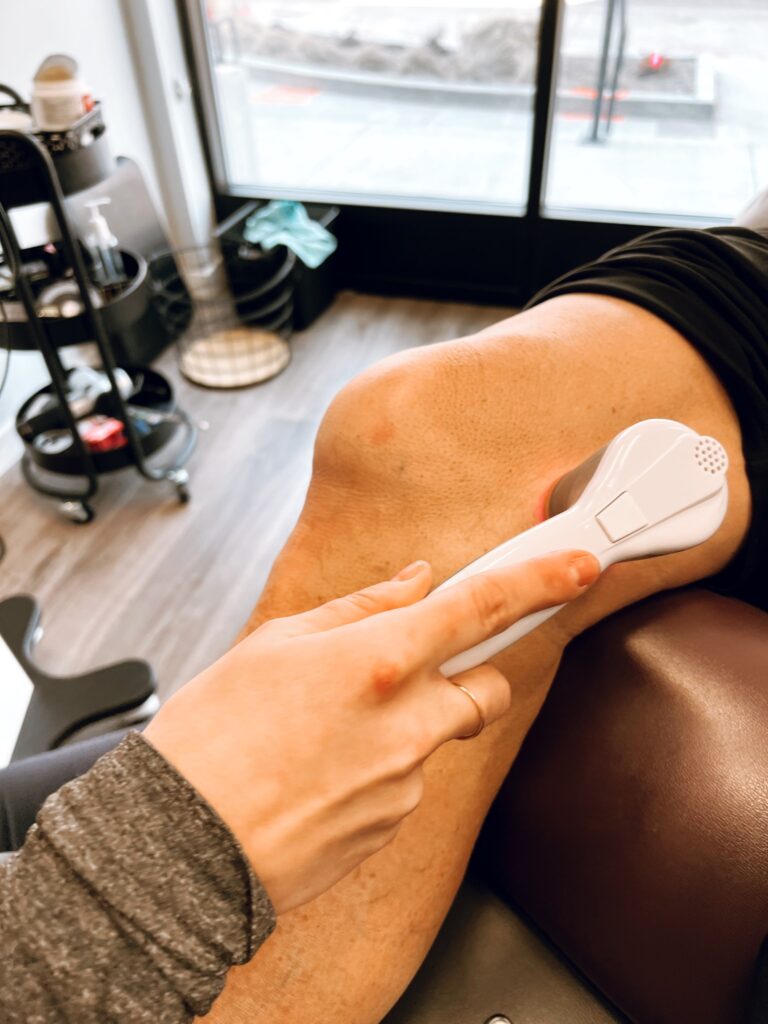
At Excelsior & Grand we use the Aspen Summit, an FDA-cleared, dual-wavelength Class 4 laser. Its higher power is designed to deliver a therapeutic dose to deeper tissue, like the muscles around the low back or the structures inside a knee.
What Laser Therapy Supports
- Energy for repair. More cellular energy in the tissue being treated.
- Local circulation. Better blood flow to the area.
- Calmer inflammation. Less swelling and irritation around an injury.
- Easier movement. Less pain, so walking, training and rehab exercises feel more manageable.
Results vary by person and condition. Laser supports healing; it doesn’t replace the strength and movement work that helps tissue hold up to your life.
WHAT LASER CAN HELP WITH
Laser Therapy for Inflammation, Soft Tissue Injuries and Recovery After Surgery
Something happened, you’re training for something, or you just want to keep moving comfortably. These are the situations where laser most often earns a place in the plan.
Sprains, Strains & Soft Tissue Injuries
A rolled ankle, a pulled hamstring, a tweaked back. Laser can help calm swelling and irritation in injured muscle and ligament while you rebuild strength and movement.
Tendon Pain & Overuse Injuries
Tennis or golfer’s elbow, Achilles and patellar tendon pain, shoulder tendinitis. Irritated tendons are a common reason laser joins the soft tissue work and loading they need to recover.
Recovery After Surgery
Pain and swelling that are slow to settle after a knee, shoulder or ankle procedure. We’ll ask about your surgery and any restrictions from your surgeon before laser becomes part of your plan.
Knee, Shoulder & Joint Pain
Achy, stiff joints, including arthritis-related pain, that make stairs, reaching overhead or a long walk harder than they used to be.
Back Pain, Neck Pain & Sciatica
Inflamed joints, irritated nerves and guarded muscles around the spine. Here, laser often works alongside chiropractic adjustments and soft tissue care.
Foot & Heel Pain
Plantar fasciitis and heel pain that’s worst with your first steps in the morning. Laser is commonly paired with soft tissue work, footwear changes and targeted exercise.
We also see: jaw (TMJ) pain, carpal tunnel symptoms, muscle spasm and some nerve-related pain, including peripheral neuropathy. Whether laser is a good fit depends on what your exam shows.
When to get medical care first: sudden severe pain, a suspected broken bone, or new numbness, weakness or loss of bladder or bowel control needs medical attention right away. Call 911 or go to the nearest emergency room.
CLASS 4 VS COLD LASER
Class 4 Laser vs Cold Laser: What’s the Difference?
Both use light to support healing. The main differences are power, what you feel and how much tissue a session can reach.
Class 4 Laser
- Power: more than 0.5 watts
- What you feel: gentle, soothing warmth for most people
- Reach: designed for deeper tissue and larger areas, like the low back, hip or knee
- Safety: protective eyewear for everyone in the room
- At E&G: the Aspen Summit, dual wavelength, FDA-cleared
Cold Laser (Low-Level Laser)
- Power: 0.5 watts or less (Class 3B or lower)
- What you feel: usually little or nothing
- Reach: often used on smaller or closer-to-the-surface areas
- Safety: eye protection is still required
Which One Makes Sense?
Neither is the right answer for every problem. The tool comes after the finding: Dr. Heather recommends laser once she understands what’s going on, and she’ll explain why it fits your plan.
GETTING STARTED
How to Get Started with Laser Therapy
Laser is a specialized appointment, so it starts with a conversation about what you’re hoping we can help with.
01
Call Us
Call (952) 920-9247 and tell us what’s going on. Our front desk will help you find the right first step.
02
Consultation or Exam
If you need one, Dr. Heather will do a consultation or exam to understand what’s happening and whether laser is a good fit for you.
03
Your Recommended Plan
If laser makes sense, you’ll get a recommended frequency and course of treatment. Laser works over a series of sessions, so we’ll suggest the package that fits it.
04
Sessions, Reassessed
Dr. Heather performs each treatment. Most people feel gentle warmth and go about their day afterward. Progress is checked along the way, and the plan changes when you do.
Laser therapy is a self-pay service, and HSA and FSA cards are accepted. After a car accident or other personal injury, laser may be covered when it’s medically necessary. You can pay per visit or choose the recommended package. Payment is due at the time of service.
THE E&G STANDARD
Laser Therapy, Used with Intention
A laser is a tool. What makes it useful is knowing when to use it, where, how often and alongside what.
That’s the same standard behind everything at Excelsior & Grand: understand first, choose the tool after the finding, explain the reason and adjust as you progress. When something else is the better answer, including a referral, you’ll hear it from us.
You have one body. Every tool used on it should have a reason.
- Findings first. Laser is recommended after we understand what’s going on.
- The right frequency. Your plan is based on your condition, not a preset protocol.
- Part of a bigger plan. Often paired with chiropractic adjustments, Active Release Techniques® (ART®), Graston Technique® or rehab exercise.
- Honest progress checks. If it isn’t helping, we change course.
PATIENT STORIES
Why Patients Trust Excelsior & Grand




Minnesota Monthly Best Chiropractor, seven years running (2020–2026) · Read more reviews on Google →
LASER THERAPY FAQ
Class 4 Laser Therapy Questions, Answered
Straight answers about how laser works, what it feels like and how to get started. Something else on your mind? Call (952) 920-9247.
What is Class 4 laser therapy?
Class 4 laser therapy uses red and near-infrared light to support the body’s natural repair process in irritated or injured tissue. It’s a form of photobiomodulation (PBM). “Class 4” refers to the laser’s power, more than 0.5 watts, which allows a therapeutic dose of light to reach deeper tissue.
What’s the difference between Class 4 laser and cold laser?
Both use light to support healing. Cold lasers (low-level lasers, Class 3B or lower) run at 0.5 watts or less, and you usually feel little or nothing. Class 4 lasers deliver more power, so most people feel gentle warmth, and the light is designed to reach deeper and larger areas such as the low back, hip or knee. Which one makes sense depends on your findings.
Does laser therapy hurt?
Laser therapy isn’t meant to hurt. Most people feel a gentle, soothing warmth, and if it ever feels too warm, Dr. Heather will adjust. Some people notice an older injury feels a little more irritated for a few days as it responds, which usually settles on its own.
Is laser therapy safe?
Class 4 laser therapy is FDA-cleared and well tolerated by most people. Everyone in the room wears protective eyewear, and your health history is reviewed first. Laser isn’t used over the eyes, over a pregnancy or over areas with known or suspected cancer. Let us know about tattoos in the treatment area or medications that make you sensitive to light.
What conditions can laser therapy help with?
Laser therapy is most often used for inflammatory pain, soft tissue injuries such as sprains and strains, tendon pain and overuse injuries, recovery after surgery, joint pain including arthritis, back and neck pain, and foot and heel pain like plantar fasciitis. Whether it’s a good fit for you depends on what’s causing your symptoms.
Can laser therapy help after surgery?
Laser can be a helpful part of recovery after surgery, especially when pain and swelling are slow to settle. We’ll ask about your procedure, your timeline and any restrictions from your surgeon before laser becomes part of your plan.
Can laser therapy help with plantar fasciitis?
Plantar fasciitis and heel pain are common reasons people try laser therapy. It’s usually most useful alongside soft tissue work, footwear changes and exercises that build strength in the foot and calf.
Can laser therapy help with knee pain and arthritis?
Many people use laser therapy for knee pain, including pain and stiffness from arthritis. It doesn’t reverse arthritis, but it can help calm irritated tissue so walking, stairs and strengthening feel more manageable.
Is laser therapy used for neuropathy?
Laser therapy is sometimes used for nerve-related pain, including peripheral neuropathy. Results vary widely, and neuropathy has many possible causes, so we’ll want to understand yours before recommending laser. Sometimes the right next step is a referral.
How many laser sessions will I need?
Laser therapy works over a series of sessions rather than a single visit. How many and how often depends on your condition, how long you’ve had it and how you respond. Dr. Heather will recommend a frequency based on your findings and check your progress along the way.
What should I expect during a laser session?
You’ll put on protective eyewear, and Dr. Heather will move the laser handpiece over the treatment area directly on the skin, so wear clothing that makes the area easy to reach. Most people feel gentle warmth, and you can return to your normal activities afterward.
Do I need to be a chiropractic patient to get laser therapy?
Not necessarily. Because laser is a specialized appointment, we first want to know what you’re hoping we can help with. If needed, we’ll recommend a consultation or exam to decide whether laser is a good fit and how often it makes sense.
How do I book laser therapy?
Call us at (952) 920-9247. Tell us what’s going on, and our front desk will help you find the right first step and appointment. If you’re already a patient, you can also ask Dr. Heather at your next visit.
Is laser therapy covered by insurance?
Laser therapy is a self-pay service, and you can use your HSA or FSA card. If you’re being treated after a car accident or other personal injury, laser may be covered when it’s medically necessary. You can pay per visit, but because laser works over a series of sessions, Dr. Heather will recommend a course of treatment and the package that fits it. Payment is due at the time of service, and self-pay patients can ask for a Good Faith Estimate.
Can I combine laser therapy with chiropractic care?
Yes. Laser is often one part of a plan that may include chiropractic adjustments, Active Release Techniques® (ART®), Graston Technique®, cupping or rehab exercise. Not everyone needs everything; each tool is chosen for a reason.
Who performs laser treatments?
Dr. Heather, DC, MS, CCSP®, performs laser treatments at Excelsior & Grand Chiropractic.
What laser do you use?
We use the Aspen Summit, an FDA-cleared, dual-wavelength Class 4 therapy laser from Aspen Laser Systems.
Where do I park?
We’re on the commercial side of The Elmwood apartments. The easiest option is the parking lot behind the building: come in through the main entrance, and our office is right inside on your left. Street parking is also available out front. If you park there, use the commercial entrance and follow the signs to our office at the back.
RECOVER · PERFORM · KEEP GOING
Find Out If Laser Therapy Is Right for You
Call Excelsior & Grand Chiropractic in St. Louis Park, MN, serving Minneapolis, Edina, Golden Valley and Hopkins. Tell us what’s going on, and we’ll help you figure out the right first step.
Already a patient? Ask Dr. Heather about laser at your next visit, or Schedule a Visit online.